


Comics Price Guide
2.6142.00 Reviews
App Specs
- Version
- 1.4.27
- Updated On
- License
- Free
- Downloads
- 10,000+
- Developer
- ComicsPriceGuide.com
- Categories
- Comics
- Platform
- Android, iOS
Screenshots
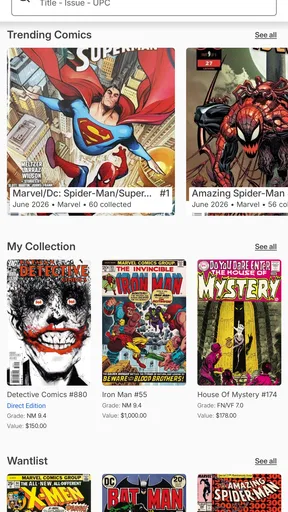
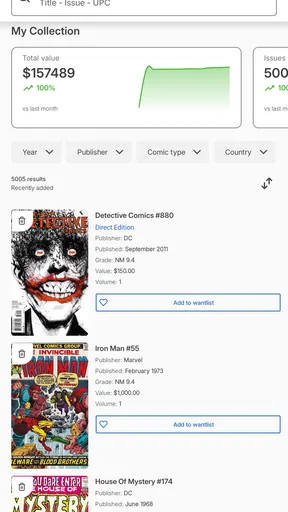
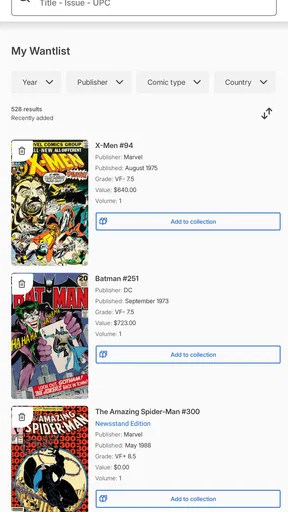

 Analysis by AppCompare
When I want to check a comic’s possible value or bring some order to a collection, I need more than a title search and a vague guess. Comics Price Guide is built for that specific job. It is a free comics app from ComicsPriceGuide.com, aimed at readers and collectors who want a mobile way to explore valuations and keep track of what they own. My overall impression is mixed but useful: it can be a practical companion for a collector who already understands that condition and edition matter, but it is not the kind of app I would trust as the only authority before selling an expensive book.
The app sits in the Comics category and carries a Teen content rating. It has passed the early experimental stage, with a release date of May 1, 2018, and the current version is 1.4.27. It is available at no upfront cost, although in-app purchases range from $8.00 to $59.99 per item. That combination makes the first decision fairly simple: install it to see whether its catalog and workflow suit your collection, but treat paid access as something to evaluate only after testing the free experience.
How I decide whether a price guide is worth using
A useful comic valuation tool has to answer several different questions. Can I identify the correct issue without wasting time? Can I separate a first printing from a later edition or a variant? Does the app help me record a collection rather than merely browse titles? And can I use the result sensibly when the physical copy in front of me has creases, color loss, missing inserts, or other condition problems?
Comics Price Guide makes the most sense when I use it as a structured reference point. I start with the exact series and issue, then compare the result with the copy in my hands. That order matters. A price shown for a comic is not automatically the price of every copy with the same cover. Condition, completeness, edition details, and current buyer interest can change the real outcome considerably.
My first practical tip is to photograph or note identifying details before searching. I look at the issue number, cover date, publisher information, and any wording that suggests a special edition. This reduces the temptation to select the first familiar title in a crowded search result. For a collection with many similar issues, that small preparation step is more valuable than rushing through individual lookups.
The app is also easier to judge if I separate two tasks: research and inventory. Research means finding a likely valuation. Inventory means deciding what I own, where it is stored, and whether I need to revisit it later. A collector who expects one quick scan to solve both problems may find the experience less satisfying than someone who approaches it as a cataloging routine.
What the mobile format does well
The strongest idea here is convenience. A phone is already beside me when I am sorting long boxes, browsing a convention table, or helping a family member identify an inherited collection. Instead of opening a browser tab for every question, I can keep the guide close to the books and make decisions while the collection is physically in front of me.
Worth Reading Before You Choose

Flipboard Shows What News Apps Must Do Beyond the Feed

Switching to Android Auto Means Rethinking Your Driving Routine

Google Calendar Makes a Crowded Week Easier to Manage

Ludo King Makes the Most of the Minutes Between Plans

Baby Panda World Brings Quick Play to Modern Phones, but Its Game Library Feels Busy

ESPN’s Live Game View Makes Following Close Games Easier
That is particularly helpful during a first pass through an old collection. I can mark the books that deserve closer inspection instead of stopping to research every minor issue. I use the guide to create a shortlist: promising keys, unusual editions, and books that appear worth protecting more carefully. The app is less useful when I treat every displayed value as final.
Another non-obvious advantage is the change in mindset it encourages. A collection becomes easier to manage when I think in records rather than piles. Even if I am not trying to sell anything, identifying each issue can reveal duplicate purchases, gaps in a run, and books that should be bagged and boarded separately. That makes the guide useful for organization as well as valuation.
A realistic everyday scenario
Imagine finding several boxes of comics in a relative’s attic. The books are mixed together, some bags are cloudy, and the original order is gone. I would not begin by estimating a total collection value. I would first separate the books by publisher and series, remove obvious duplicates, and use Comics Price Guide to identify issues one group at a time.
For each promising book, I would record the issue identity, inspect the cover and pages, and place it in a separate stack for a more careful review. Common issues could return to the general boxes, while books with unusual details would stay isolated. This workflow prevents one exciting search result from making the whole collection seem more valuable than it really is.
If I later decide to sell, I would use the app as a screening tool and then compare the result with actual marketplace activity and advice from a knowledgeable comic shop. That second check is essential because a guide value and a completed sale are not always the same thing. The app helps me decide where to spend attention; it does not remove the need for judgment.
Useful habits for better results
I would keep a small note beside me while cataloging. For each book, I would capture the issue number, visible condition problems, whether the cover is attached, and any missing pages or inserts. This is one of the best ways to avoid a common mistake: assigning a high reference value to a copy that does not match the assumed condition.
I would also work in batches instead of jumping randomly between titles. Finish one series, check for duplicates, and then move to the next. A batch approach makes the collection easier to audit later and exposes gaps that are easy to miss when every search is isolated.
A third useful trade-off is deciding when not to research. If a book is clearly damaged and has no personal importance, a detailed valuation may not justify the time. I would reserve deeper checks for keys, early issues, unusual covers, complete runs, and books that might be worth professional advice. This keeps the app from turning collection management into an endless data-entry project.
Where Comics Price Guide fits—and where another approach may be better
I’d use this section to draw a practical line between a focused comic reference and the tools that answer different questions. Comics Price Guide is most useful when I’m identifying issues and organizing a collection; a spreadsheet, market search, or specialist can be a better fit when I need custom records, current sale context, or greater confidence before a high-stakes sale.
Its main strengths for collectors
The app’s clearest strength is focus. It is not trying to be a general entertainment platform or a social feed. Its purpose is tied directly to comic valuations and collections, which makes it relevant when I am holding a physical issue and need a starting point. The developer, ComicsPriceGuide.com, is also reflected in the product’s narrow identity: this is designed around comic reference work rather than broad shopping or reading.
The free entry point is another reason I would try it before committing to a different system. A new collector can explore the basic workflow without paying simply to install the app. That matters when the real question is not “Do I need a price guide?” but “Does this particular cataloging approach match the way I sort my books?”
Its audience is not tiny either. The app has over ten thousand installs, while its average rating is 2.6 from around two hundred ratings and over one hundred reviews. I read that combination as a warning to test the interface personally rather than assuming that popularity equals polish. There is enough adoption to make the app worth investigating, but the rating suggests that some users have encountered friction.
The most important strength, in my experience, is not a single number on a screen. It is the possibility of creating a repeatable process. A collector who uses the same identification and condition checks every time can get more value from a modest guide than someone who jumps between several sources without recording anything.
Where the friction shows up
The app is not ideal for someone who wants a completely automatic answer. Comic identification is full of near matches, and a phone-based guide cannot inspect every physical detail of a book. I still have to read the issue carefully, distinguish editions, and judge condition honestly. Anyone expecting instant appraisal will probably be disappointed.
The rating also makes me cautious about relying on the app for a large, urgent project. If I had thousands of comics to process before a move, I would test a small sample first. I would check whether searches are comfortable, whether the collection workflow fits my habits, and whether I can correct mistakes without starting over. If those basics feel slow, a spreadsheet or desktop catalog may be more efficient for bulk work.
There is also a financial decision after the free starting point. Optional purchases cost between $8.00 and $59.99 per item, so I would not buy anything immediately. I would first identify the exact feature or access level I need, then compare that cost with how often I will use the guide. A casual reader who checks a few books each year may not gain enough from paid access, while an active collector could find it reasonable if it saves repeated research time.
That is where alternatives divide into categories. A general search engine is better when I need current sale examples, auction context, or opinions from collectors. A spreadsheet is better when I want complete control over fields, storage locations, purchase notes, and custom condition comments. A specialist shop or experienced appraiser is better when the collection includes potentially valuable keys and the financial consequences of a mistake are significant.
I would not see those options as direct replacements in every situation. The app can provide a focused reference layer, the spreadsheet can provide personal records, and a human expert can provide context. The right choice depends on whether my priority is quick identification, long-term inventory control, or confidence before a sale.
Who should use it and who should skip it
I would recommend trying it if you are building your first collection, sorting inherited comics, checking duplicates, or creating a shortlist of books that deserve closer attention. It is also suitable for a collector who enjoys doing the research personally and understands that a reference value is only one part of an appraisal.
I would skip it as a primary tool if you want a fully automated scanner, a guaranteed selling price, or a professional valuation without learning comic terminology. I would also look elsewhere if your main goal is reading digital comics rather than identifying and organizing physical issues. This is a reference and collection app, not a replacement for a comic-reading service.
For serious sellers, I would use it early in the process and not at the end. It can help narrow a large group into books worth checking, but final pricing should reflect condition, demand, edition accuracy, and the venue where the book will be offered. That distinction protects against both overpricing and accidentally selling something important too cheaply.
What happens when you switch workflows
The cost of switching away from the app is mostly organizational rather than technical. If I have already built a collection record inside one system, moving to a spreadsheet or another catalog may require re-entering titles and correcting inconsistent notes. That is why I would decide on a naming and condition routine at the beginning, even for a small collection.
My approach would be to maintain a simple backup record for the books that matter most. I would note the title, issue, edition clues, condition observations, and storage location in a format I can read independently. This does not replace the app; it reduces the risk of losing the reasoning behind a valuation if I later change tools.
Switching in the other direction has its own cost. A spreadsheet gives me flexibility, but it does not automatically provide a comic-focused reference structure. I would need to research titles manually and decide how to keep values current. A general browser search may expose more market discussion, but it can also produce inconsistent answers and distract me with unrelated results.
For that reason, I would not migrate simply because the app has limitations. I would switch when those limitations affect my actual task: repeated lookup errors, an inventory too large for comfortable mobile entry, or a need for sales analysis that a price guide does not cover. Until then, a focused guide plus careful notes may be the simpler arrangement.
My final recommendation
Comics Price Guide is worth a cautious trial, not blind reliance. I like the idea of having a dedicated comic reference tool while sorting physical books, and the free starting point lowers the risk of testing it. Its best use is as a filter and organizing aid: identify likely issues, structure a collection, and decide which books deserve deeper research.
I would keep my expectations realistic. The app cannot replace condition knowledge, edition checking, current market research, or professional advice for a valuable collection. The modest average rating means I would test the workflow on a small group before paying for optional access, especially if I am planning a large cataloging project.
After using it, my decision would be straightforward. Choose it if you want a focused mobile companion for comic valuations and collection work, and you are comfortable checking details yourself. Choose a spreadsheet if customization and bulk inventory matter more. Choose broader market research or a specialist when the goal is a confident sale price. For a collector who understands those boundaries, this app can earn a place in the sorting box—just not the final word on what a comic is worth.
Pros
- Covers a wide range of comic issues
- editions
- and publishers.
- Useful price references for collectors building or checking a collection.
- Helps identify valuable comics before buying
- selling
- or trading.
- Search tools make it easier to find specific titles and characters.
- Community features can support collection sharing and discovery.
Cons
- Pricing may vary from actual local market values or recent sale prices.
- Some detailed information may require registration or a paid membership.
- Older or less popular issues may have limited pricing data.
- The interface can feel crowded when browsing large comic databases.
- Condition grading still requires personal expertise and careful inspection.
FAQs for Comics Price Guide
What is Comics Price Guide, and what can I use it for?
Comics Price Guide is a reference tool for comic book collectors who want to identify issues, research estimated values, and organize information about their collections. It can be useful when buying, selling, or simply checking the market history of a comic. The available details may vary by title and issue, so it should be treated as a helpful guide rather than a guaranteed appraisal.
Does Comics Price Guide provide accurate and up-to-date comic book values?
The app can provide useful pricing information based on available catalog data and market references, but comic values change frequently. Condition, edition, printing, rarity, demand, signatures, restoration, and current sales can all affect the final price. Before making an important purchase or sale, compare the displayed estimate with recent marketplace listings or consult a qualified comic book appraiser.
Can I use Comics Price Guide to identify the value of my entire collection?
You can use Comics Price Guide to research individual issues and, depending on the available collection features, keep track of comics you own or want to acquire. However, entering a large collection may take time, especially when issues have multiple variants, annuals, reprints, or similar cover designs. Carefully verify issue numbers, publication dates, editions, and conditions to avoid inaccurate collection totals.
Does Comics Price Guide include comic books from every publisher and country?
The catalog may cover a broad selection of popular publishers, series, characters, and collectible issues, but no pricing database includes every comic ever published. Coverage can differ for independent publishers, international editions, foreign-language releases, magazines, promotional comics, and very recent issues. If you cannot find a particular comic, check alternate titles, issue information, or the service’s available search and support options.
Is Comics Price Guide free to download and use?
Availability, pricing, and included features can depend on the platform, region, and current version of the service. Some functions may be accessible without payment, while advanced tools, expanded pricing data, account features, or an ad-free experience may require a subscription or other purchase. Review the app-store listing and any in-app payment details before downloading or entering billing information.


